The platform
Organizational readiness platform for sensitive conversations
Product screenshots show the current Hebrew interface. The labels and explanations on this page are in English; the separate product application has not been localized here.
Simulation platform for practicing sensitive conversations
Not practicing a correct answer. Preparing for a changing reality
Not a video course. Not roleplay with an actor. In-Touch is an AI simulation that adapts to the role, environment and cultural context - with clinical protocols behind it.
Scenario adapted to the field
The role, situation, language, and purpose of the conversation are defined in advance.
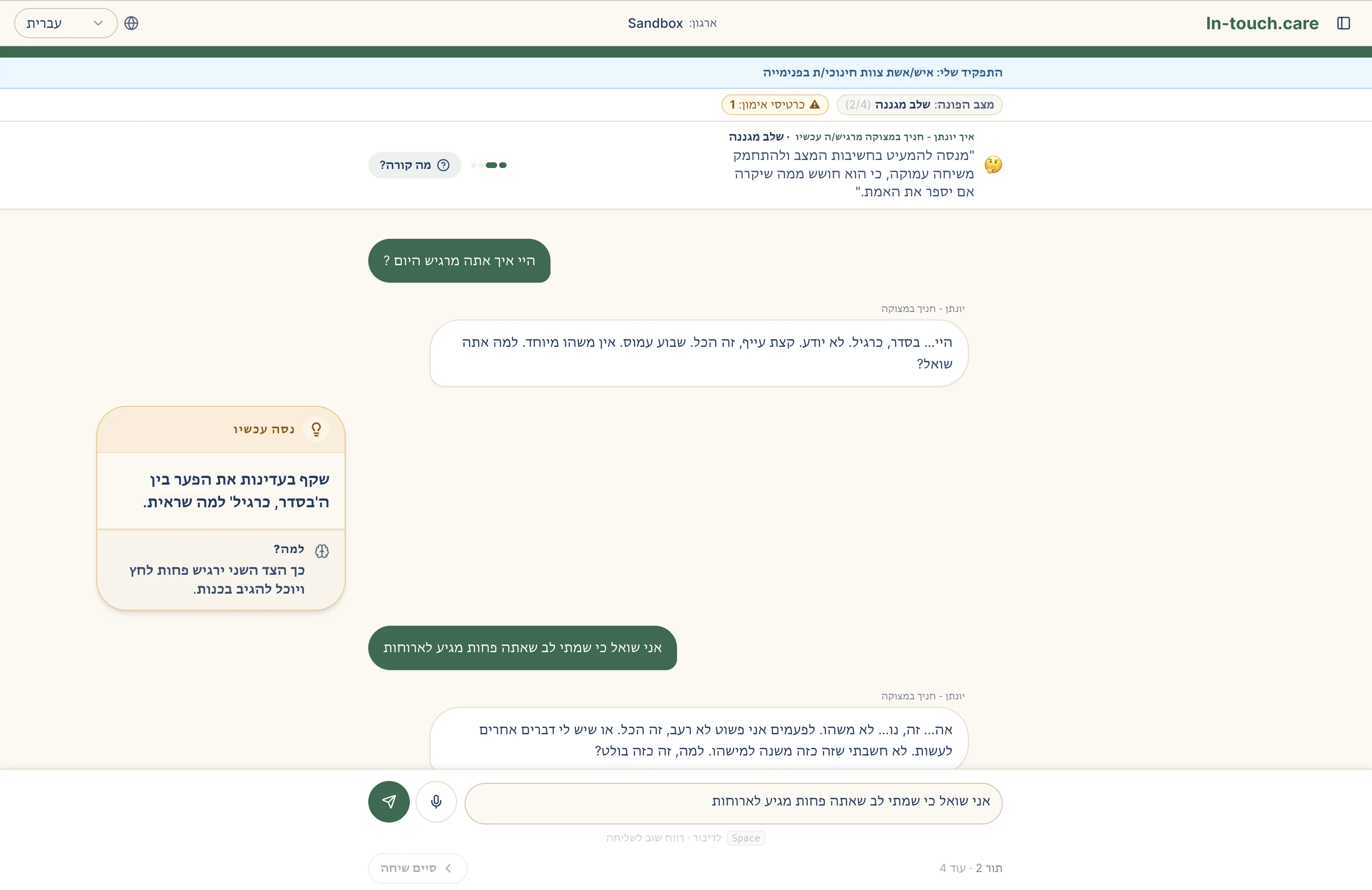
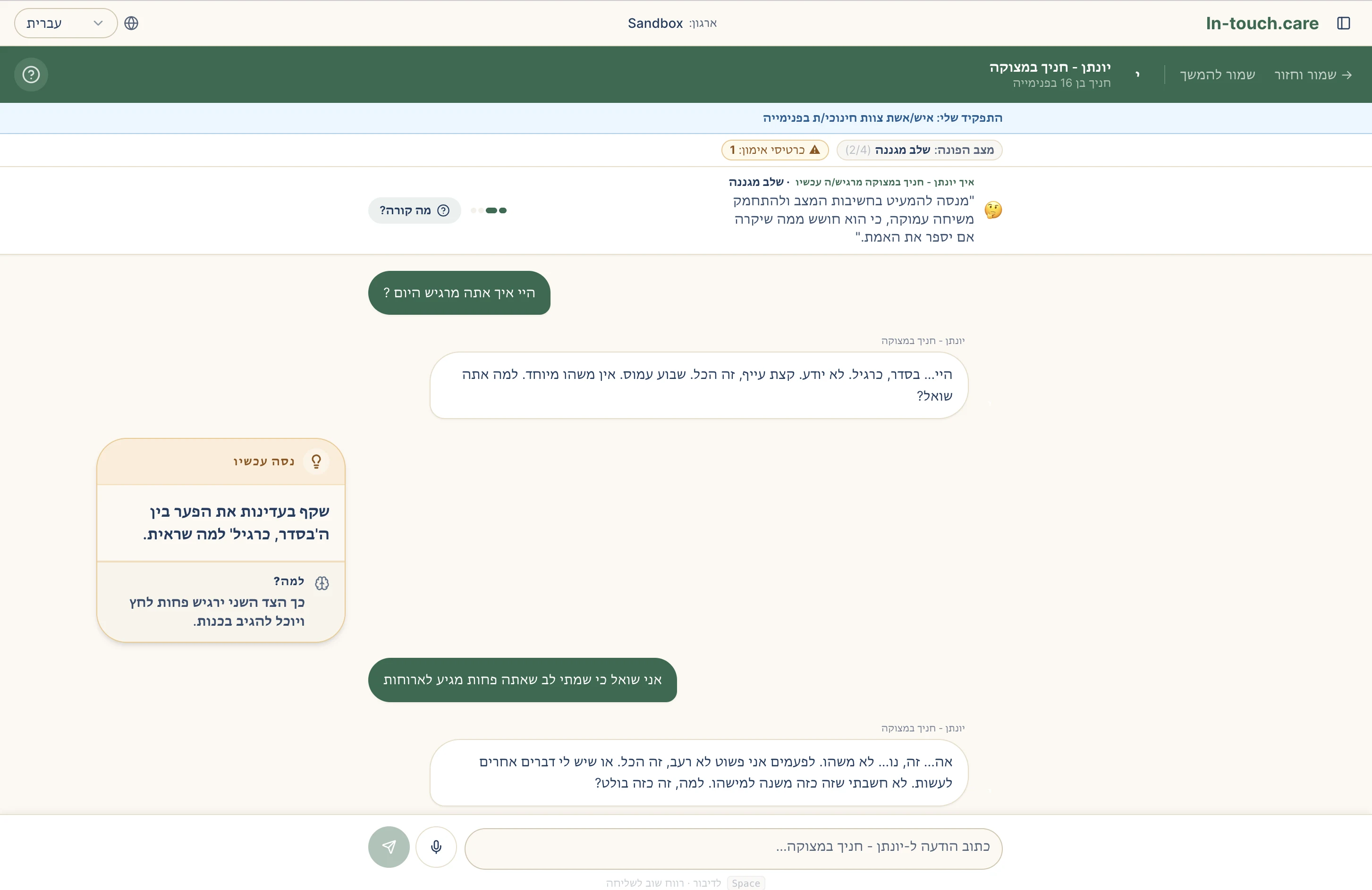
A character that responds in real-time
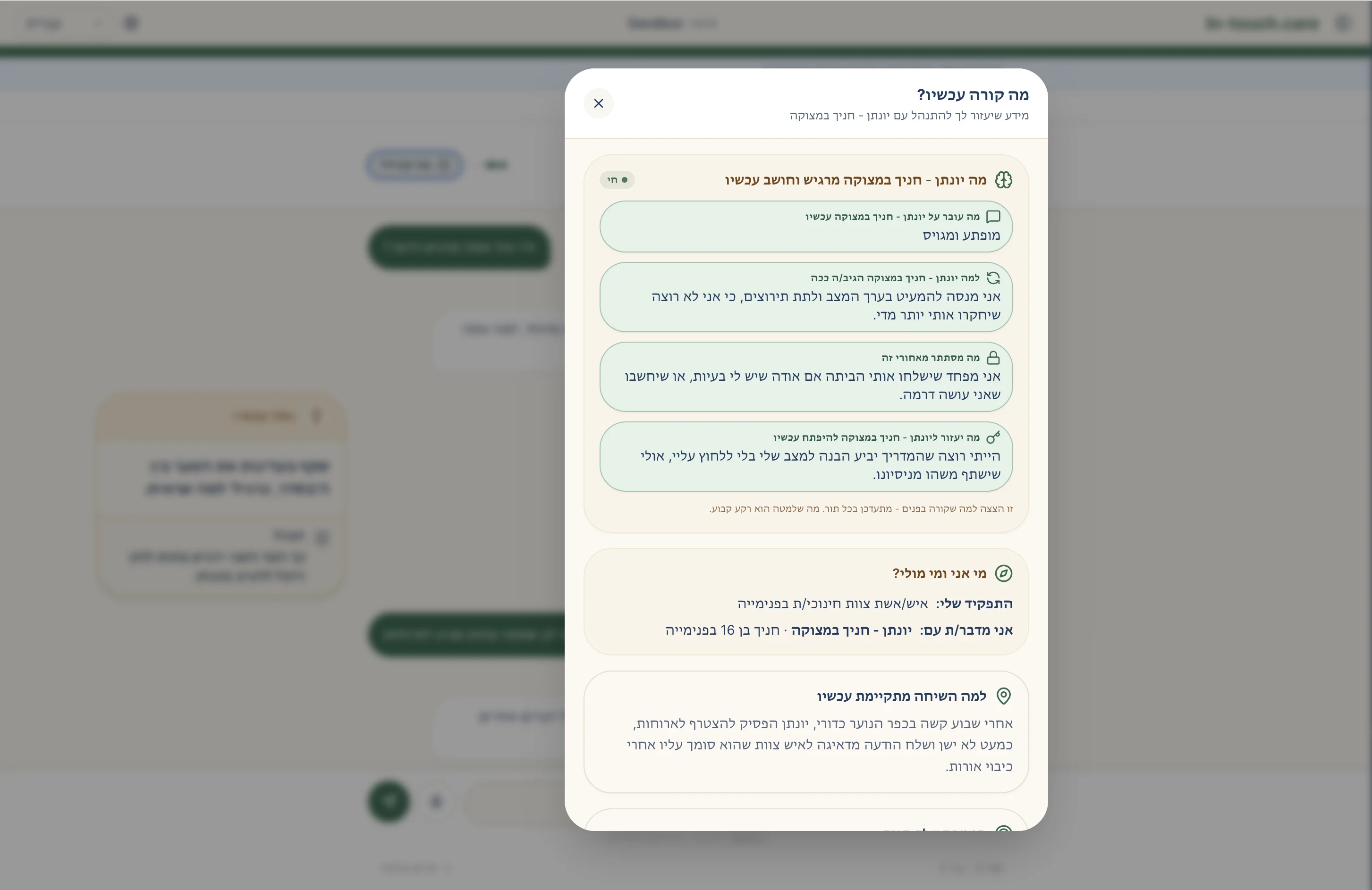
The character can open up, resist, or escalate depending on how the conversation proceeds.
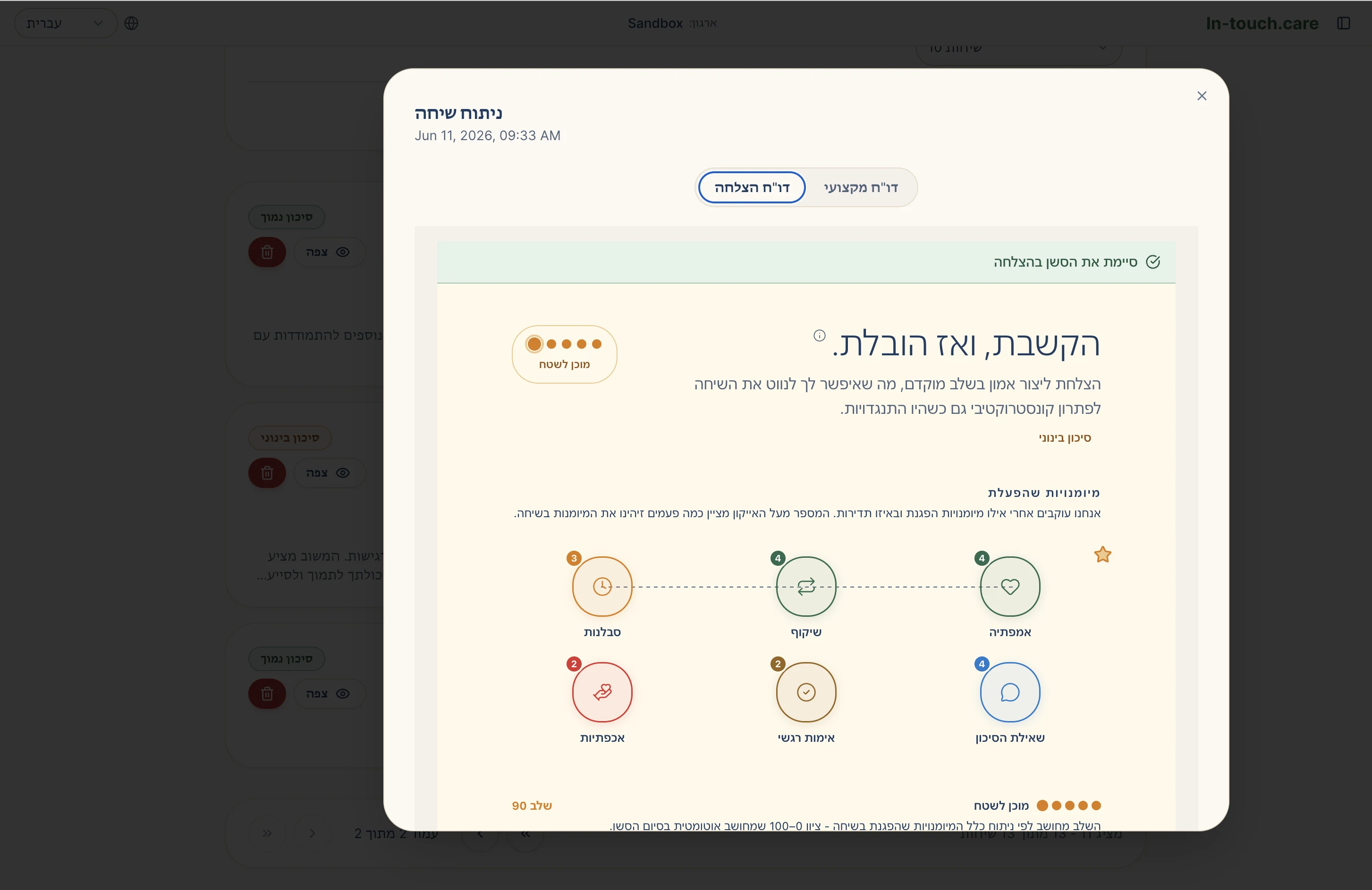
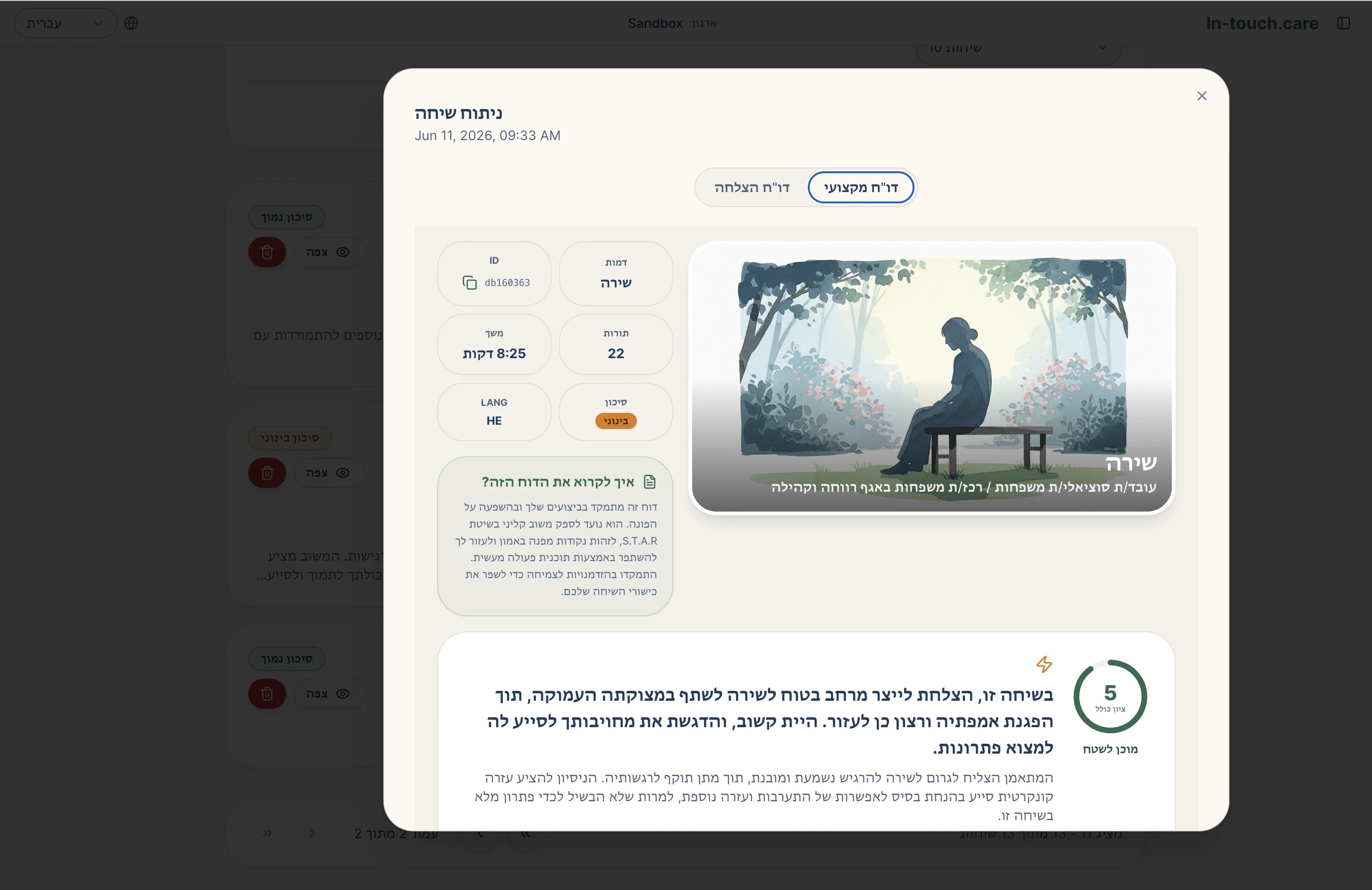
Feedback that leads to improvement
At the end of the practice, the user understands what worked, what blocked the conversation, and what should be tried next time.
Not an open chat. A controlled AI simulation based on professional methodology.
Resistance meter:
DefensivenessGuardedOpensSharing
Safe openingEmotion reflectionThe door was not closed
Real-time feedback · based on clinical methodology
Listening without judgmentNormalizationOpen for continuation
Real-time feedback · based on clinical methodology
Gentle openingFocus on the solutionDo not push
Real-time feedback · based on clinical methodology
ClaritySpace for emotionInvitation to ask
Real-time feedback · based on clinical methodology
Controlled simulation · The AI character reacts, resists, and opens up · The AI operates within a clinical framework
User experience
How it works
Five simple steps - from knowledge to improvement over time.
Learning the basics
The user starts at the knowledge center: professional content, expert conversations, and readiness checks, tailored to their role and environment.
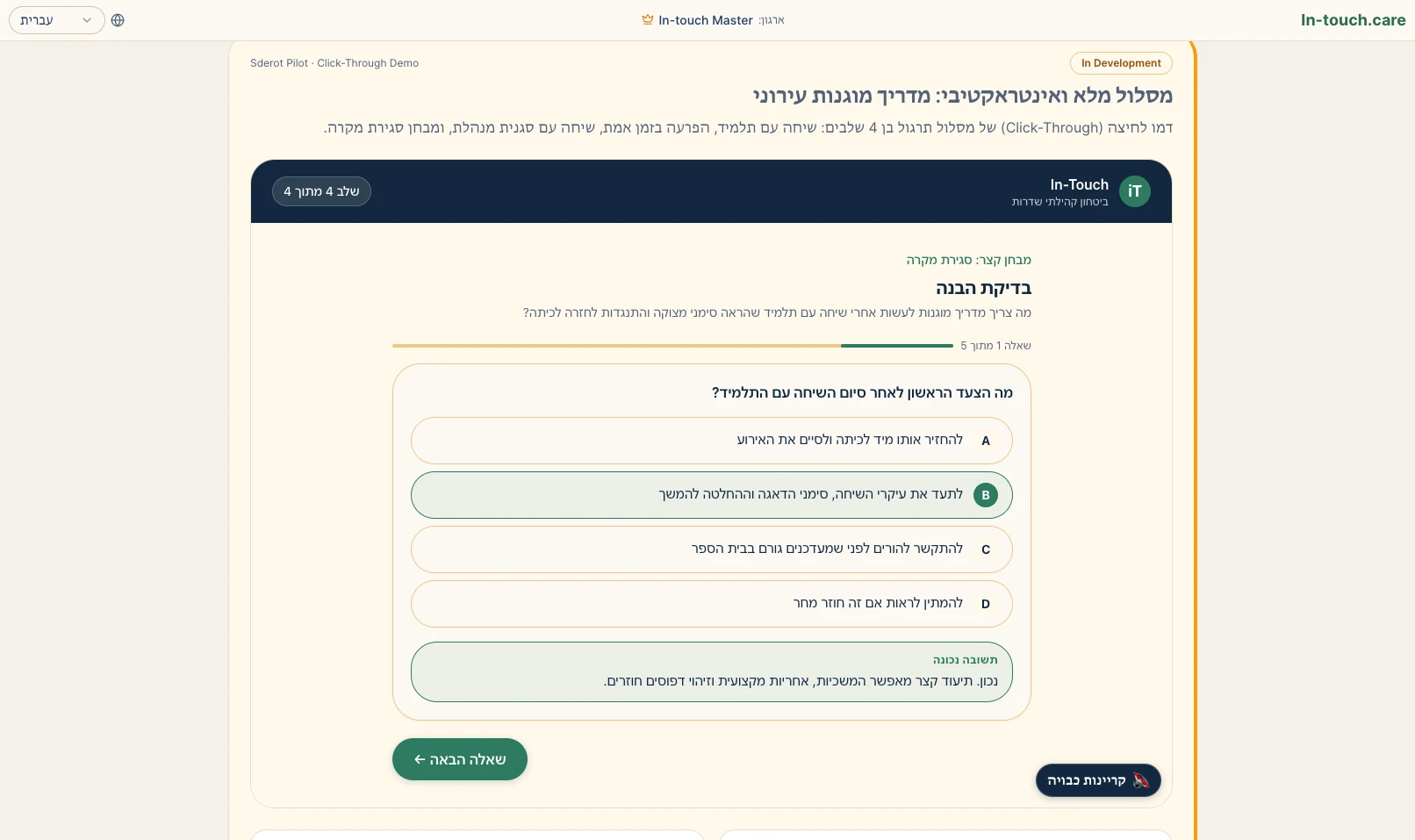
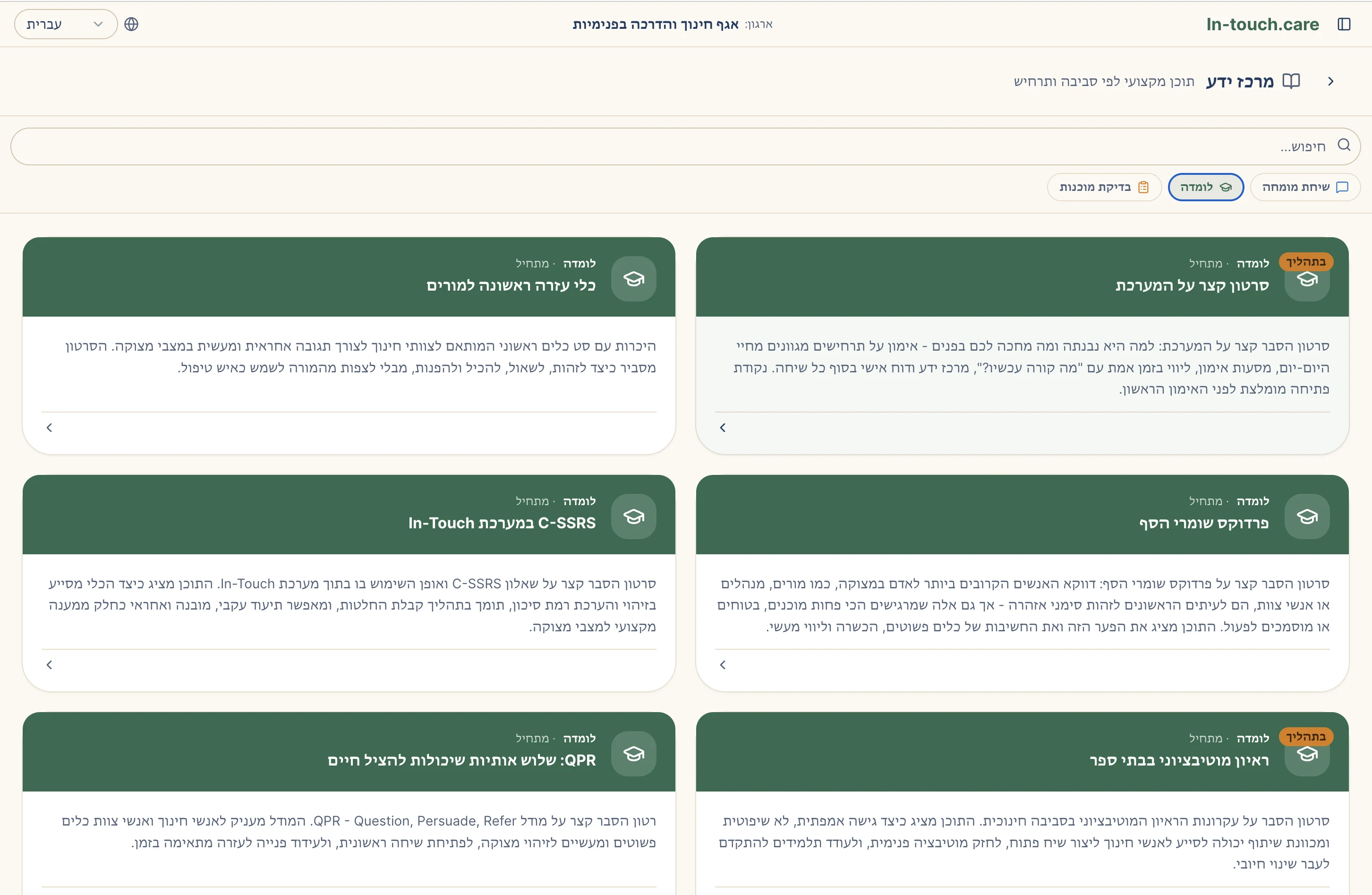
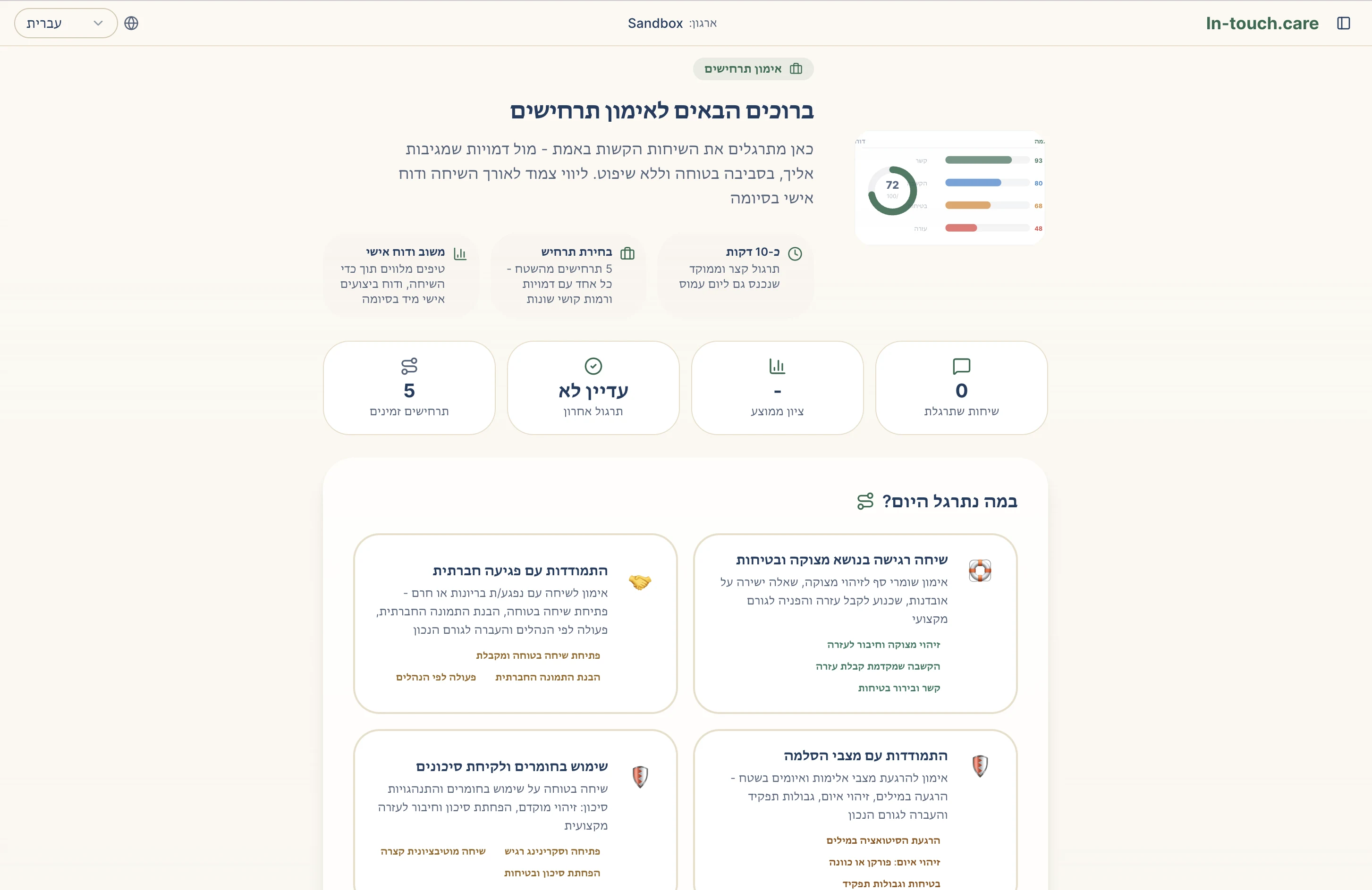
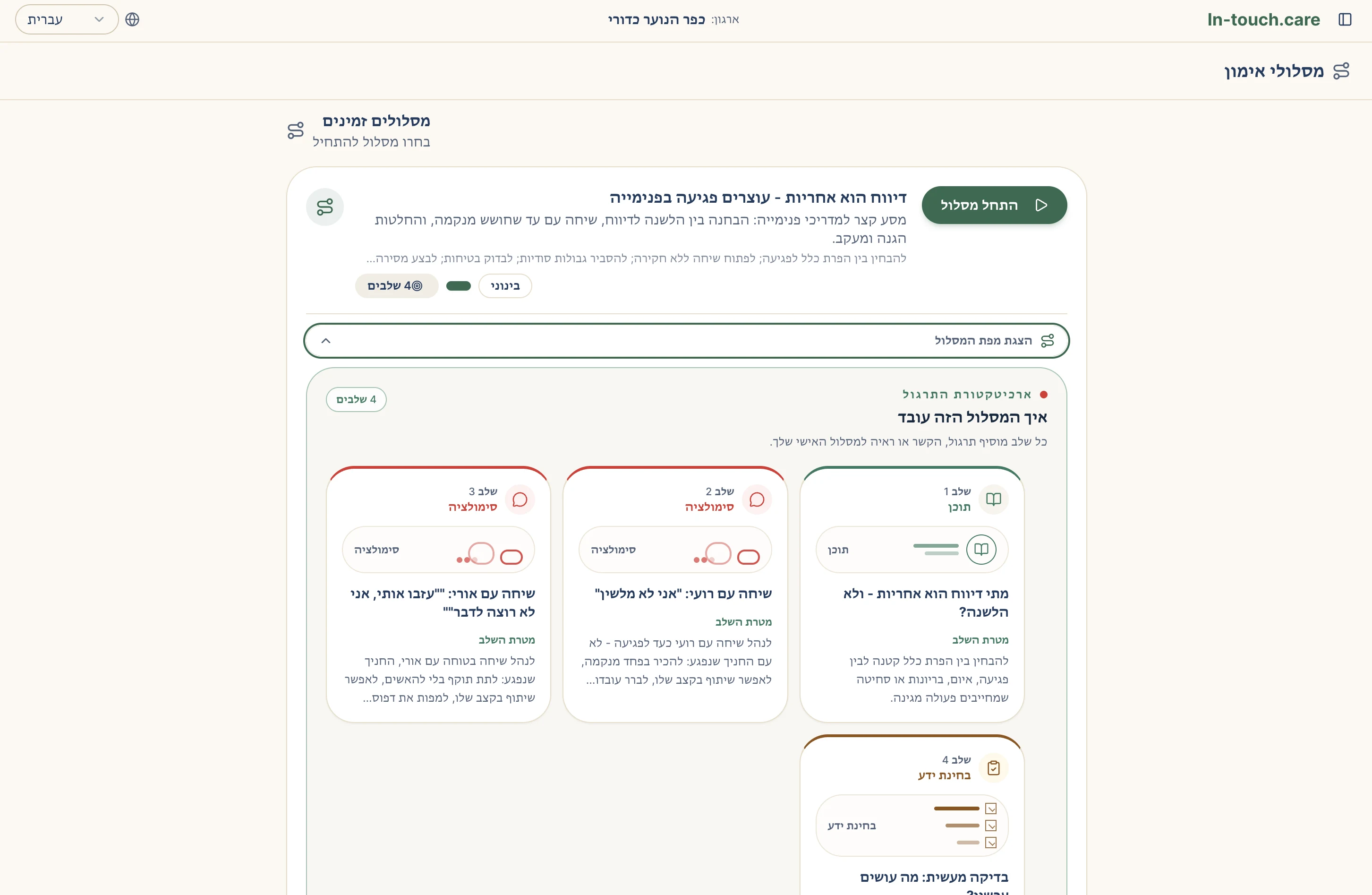
Readiness check and learning paths
Learning the basics
The user starts at the knowledge center: professional content, expert conversations, and readiness checks, tailored to their role and environment.
Entering a scenario
The user enters a realistic situation that is relevant to their role and environment.
Managing the conversation
The user conducts a real-time conversation with a character that responds, opens up, resists, or escalates.
Receiving feedback
At the end of the conversation, the user receives personal feedback - what worked, what blocked, and what can be improved.
Continuing to practice
Progress does not end with a single conversation. Training paths organize scenarios, lessons, and knowledge checks as a graded journey by role, so the next step is always clear.
The value for the organization
From a single conversation to organizational ability.
Every practice strengthens the person managing the conversation. Together, the practices become an organizational picture that allows identifying gaps, focusing training, making decisions, and building better readiness in the field.
Organizational readiness
Professional knowledge
Knowledge CenterThe organization's knowledge, procedures, and content become a common basis for learning and practice.
Practice and readiness
Core system · simulations and feedbackRealistic scenarios allow practicing complex conversations and situations in a safe environment, receiving feedback, and improving readiness.
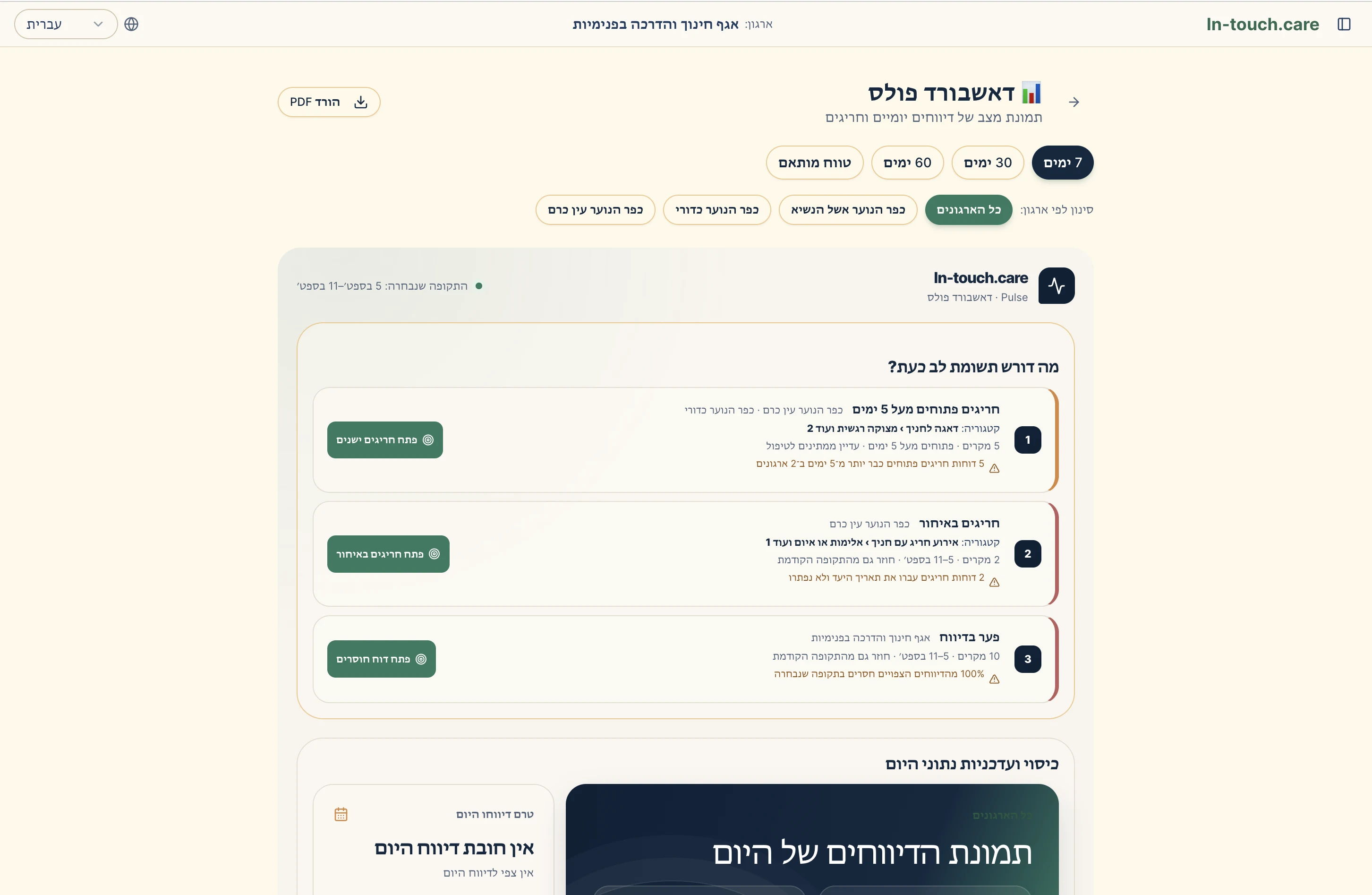
Status picture from the field
PulseFrontline professionals share events, dilemmas, and recurring issues from their daily work - and connect the system to what is happening in practice.
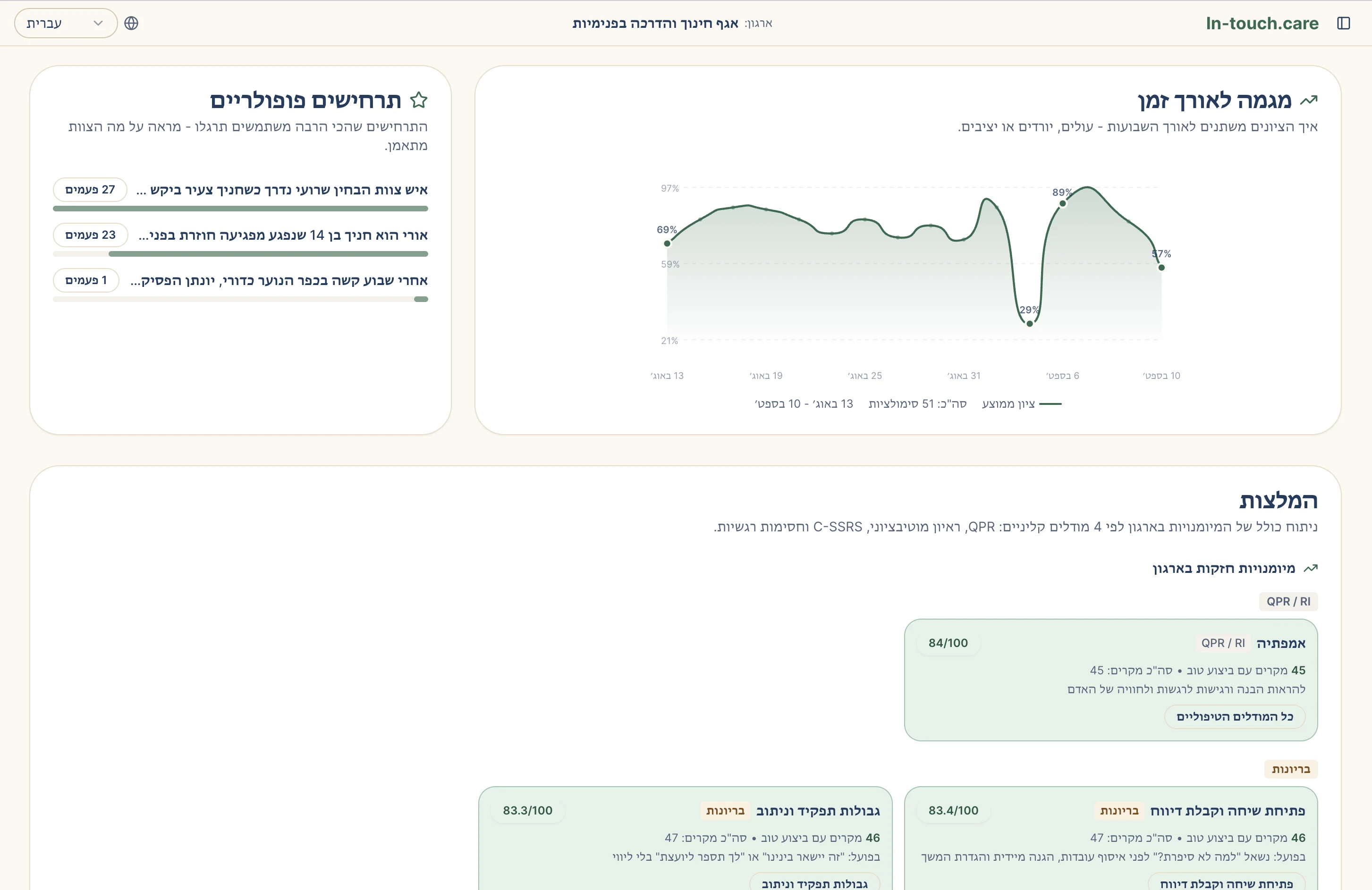
Learning and organizational insights
Insights and trendsThe organization identifies patterns, gaps, and issues that require reinforcement - and receives a broader picture of the team and the field.
Professional knowledge
Knowledge CenterThe organization's knowledge, procedures, and content become a common basis for learning and practice.
Back to knowledge and practice
What emerges from the field returns to the system - and updates the knowledge, content, and next practice.
The organizational status picture
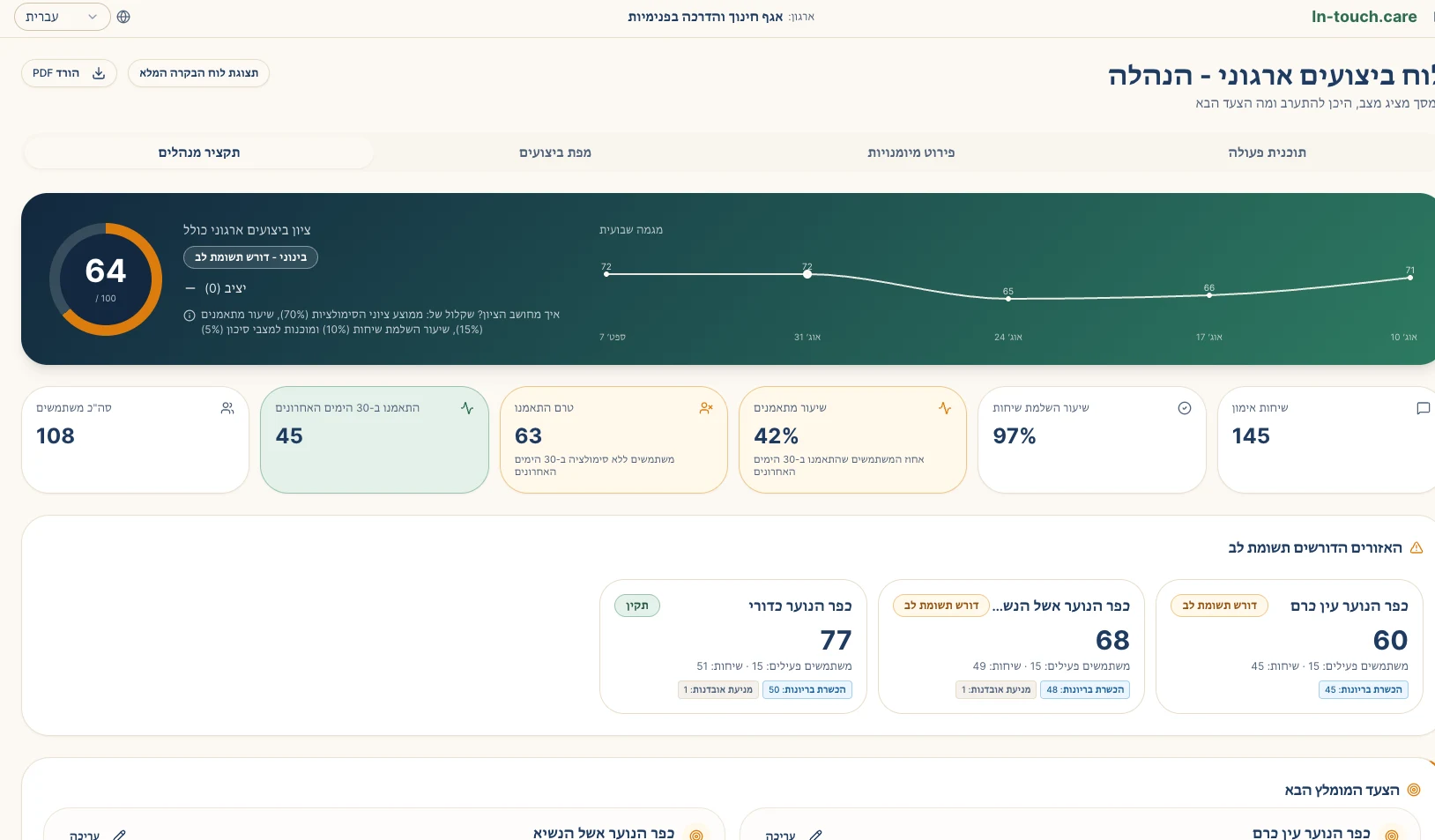
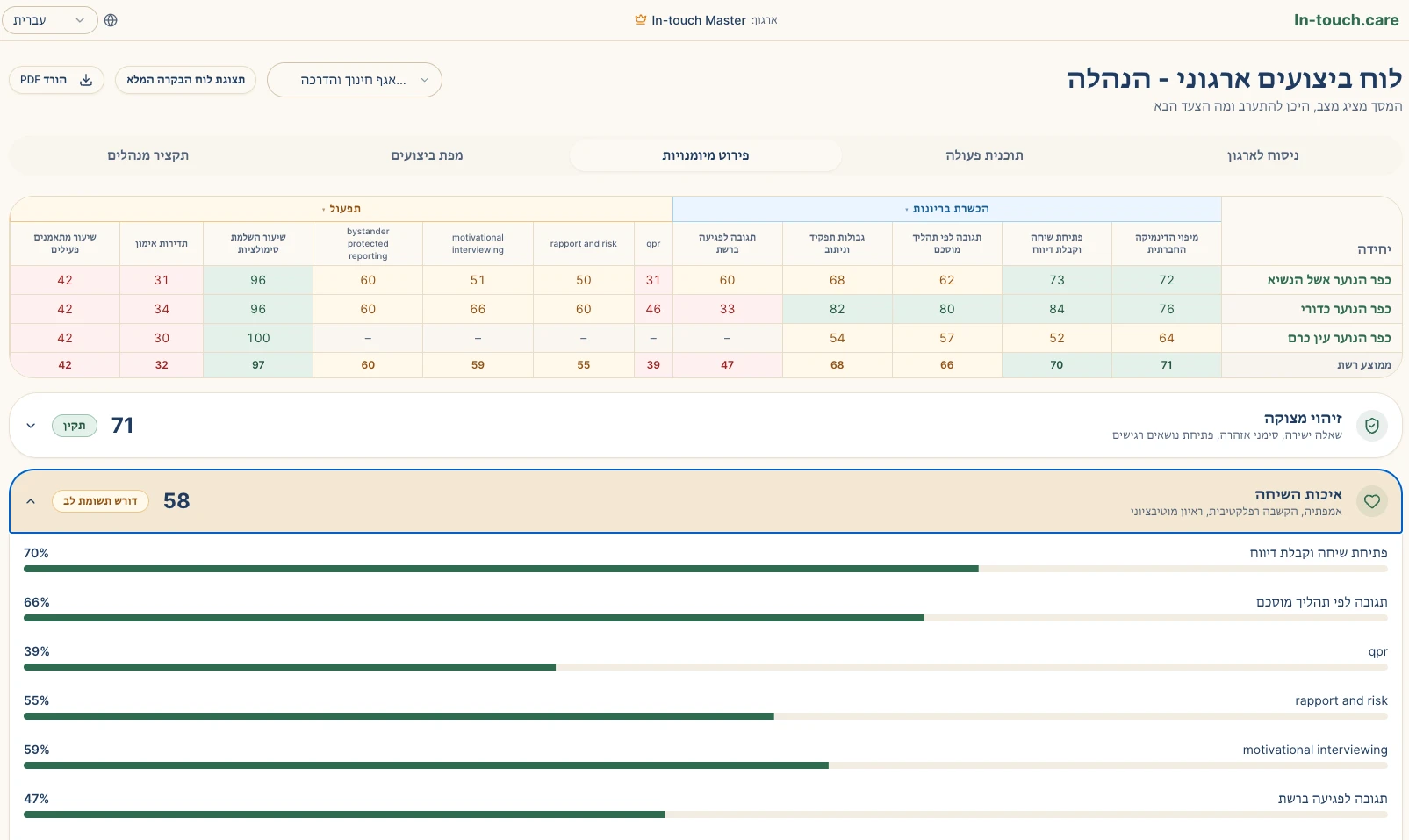
Real-time organizational performance dashboard
14 Screen
The organizational status picture
The manager sees in real time the status of trainings, simulation scores, and the team's readiness levels.
Real-time organizational performance dashboard
The organizational status picture
The manager sees in real time the status of trainings, simulation scores, and the team's readiness levels.
What happens in the field
Field reports from the staff reach the manager directly: events, difficulties, and recurring needs from daily work.
Skills breakdown
The manager sees which skills are strong and which require strengthening, at the individual level and for the entire team.
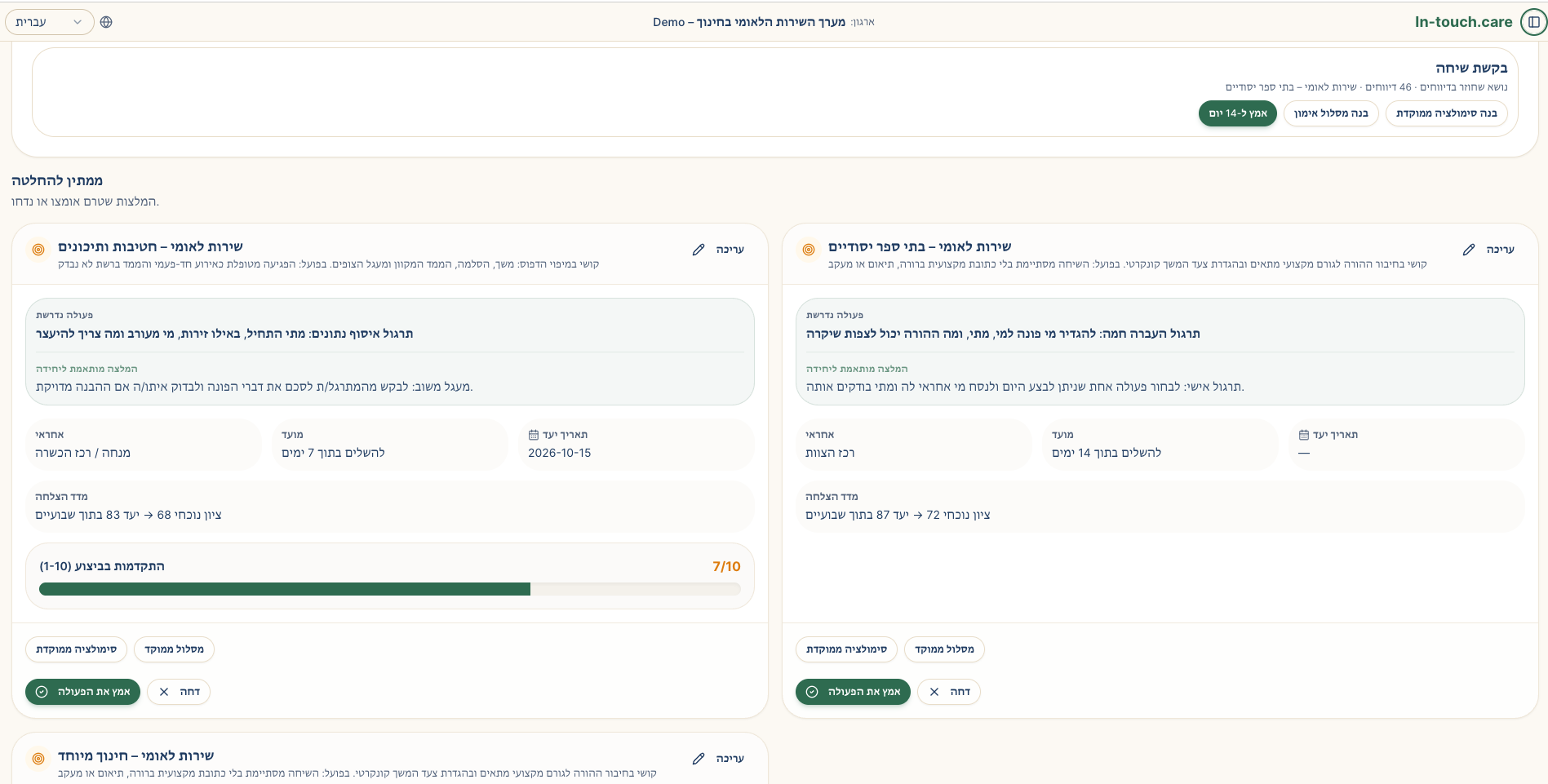
Recommendations and action plan
The system does not just display data. It offers concrete recommendations, identifies those who need support, and suggests clear steps for improvement.
Pulse · Snapshot from the field
Recurring events, dilemmas, and needs.
Pulse allows frontline professionals to share events, dilemmas, and recurring issues from daily work. The information helps managers identify patterns and areas for reinforcement, and focus learning and training.
It is important to distinguish: Pulse is not a readiness percentage and is not a substitute for emergency or clinical reporting.
Not an open chat. Every simulation operates within a defined clinical framework.
Not a free conversation. Every sentence of the character stems from a defined clinical framework. The character cannot exceed the boundaries defined for it.
Real-time oversight. At every turn in the conversation, three AI agents analyze the response in parallel. If a deviation is identified, the clinical agent intervenes.
Building confidence through practice. The feedback is adapted to the scenario and the relevant professional models, to help users identify what worked, improve, and approach the next conversation with more confidence.
Privacy and anonymity. Practice data is stored anonymously, and organizational reports show trends and insights without personal identification.
QPRC-SSRSOlweus observer protocolCSTAG modelMotivational Interviewing (MI)Crisis Development Model (CPI) · Verbal de-escalationSBIRT
Ready to see the product?
Want to see an example?30 minutes. A scenario from your field. No obligation.